Getting faster treatment for a brain bleed: what causes the delays?
Published in the Internal Medicine Journal, 2026 · Summary posted 6 July 2026
In plain language
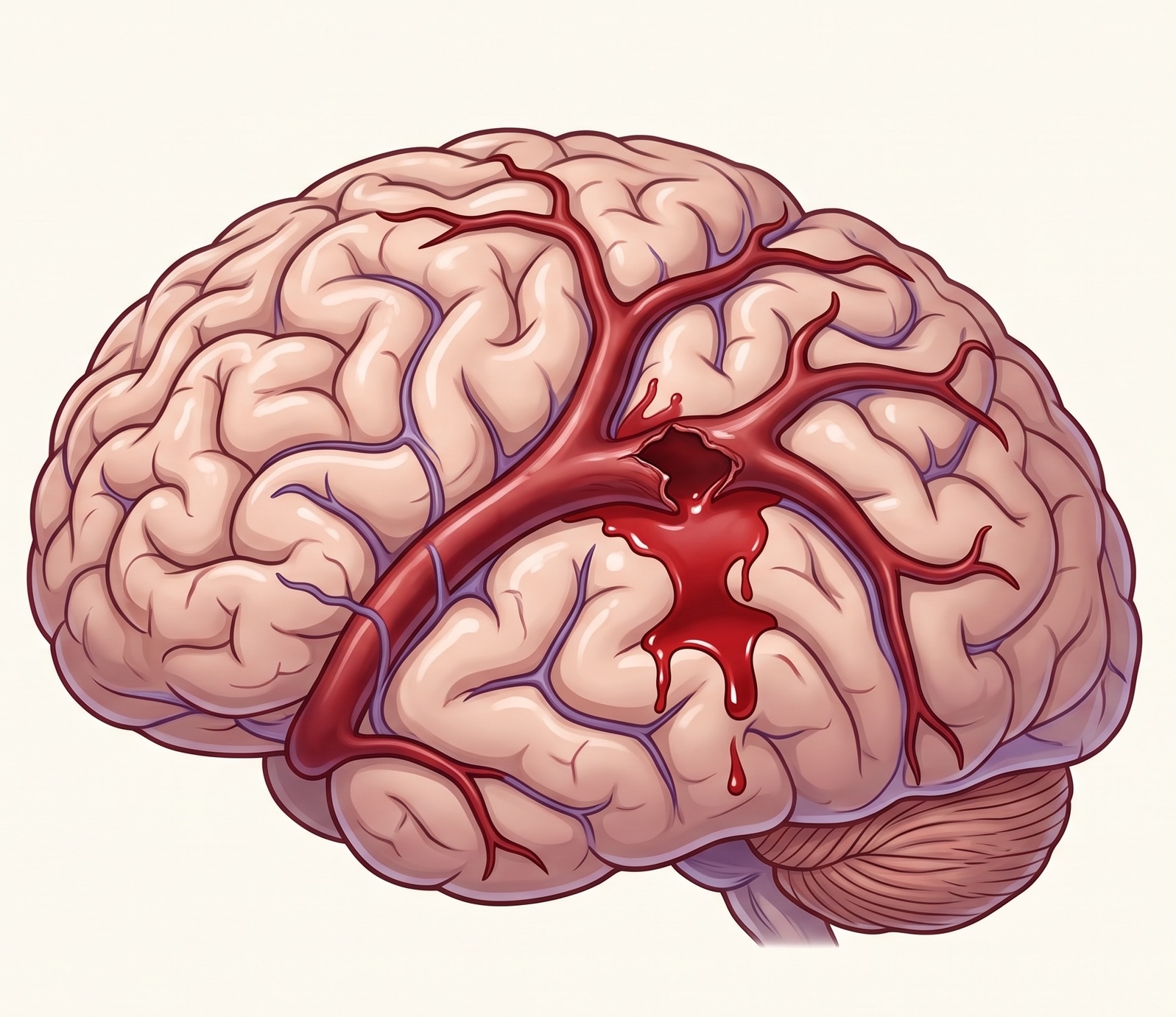
An intracerebral haemorrhage is a stroke caused by bleeding within the brain itself, rather than by a blocked artery. It makes up about one in five strokes but has the worst outcomes, and treatment has historically been slower than for clot-type (ischaemic) stroke. One of the most important early treatments is lowering the blood pressure quickly but carefully — major trials such as INTERACT3 aim to bring systolic pressure below 140 mmHg within an hour of arrival, which helps limit further bleeding.
This study reviewed every ICH patient admitted to Monash Health in 2023 — 209 people in all — to measure how quickly they actually reached that blood-pressure target, and to work out which factors sped things up or slowed them down.
What the study found
Only about one in four patients (25%) reached the target blood pressure within the recommended hour; half took more than three hours. Three things stood out as linked to slower blood-pressure control: a higher blood pressure on arrival, longer waits for an emergency-department bed (where the close nursing needed to manage BP safely happens), and not being activated as a “Code Stroke.”
Patients who went through the existing Code Stroke pathway had their CT scan far sooner (a median of about 33 minutes, versus 121 minutes without) and, once differences between the groups were accounted for, reached their blood-pressure target earlier — and fewer of them failed to reach it at all (8% versus roughly 18%).
Why it matters
Code Stroke systems were built mainly around clot-type stroke, yet this work shows they also help patients with a brain bleed — while making clear there is room to do better, since most patients still didn't reach the aggressive early targets set by recent trials. The authors make the case for a dedicated, protocol-driven “Code ICH” pathway — including fast access to a monitored ED bed — so more patients get their blood pressure under control within the crucial first hour. It points to practical places where hospitals and stroke networks can save time, and sits alongside my broader interest in building faster, more consistent acute-stroke care.
The paper
This is a summary of published research written for general readers, not medical advice. If you or someone you care for has symptoms of stroke — such as sudden weakness, difficulty speaking, or a sudden severe headache — call 000 (in Australia) immediately. For questions about your own health, please speak with your doctor.
← Back to all research summaries